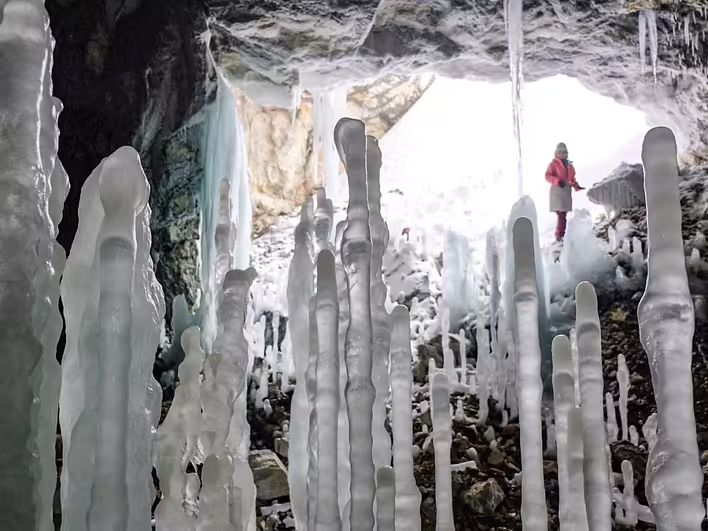
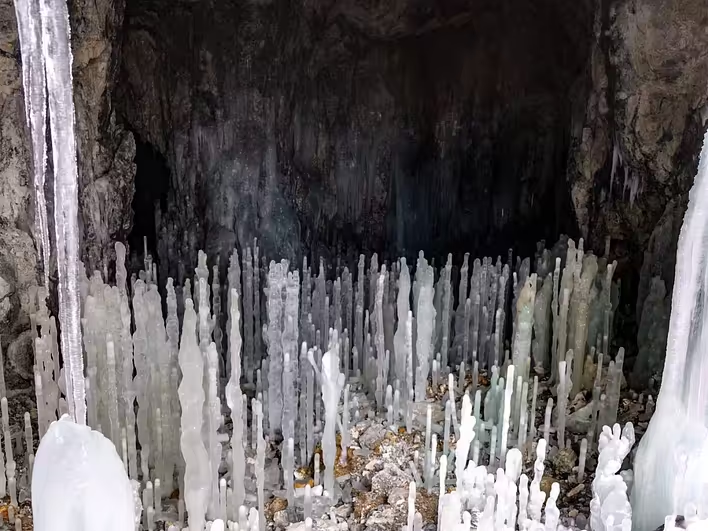
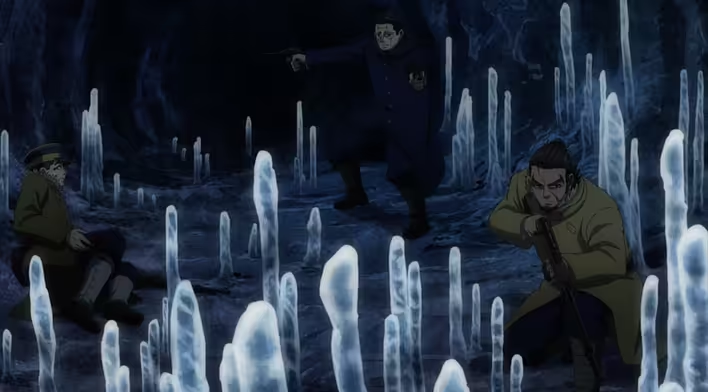
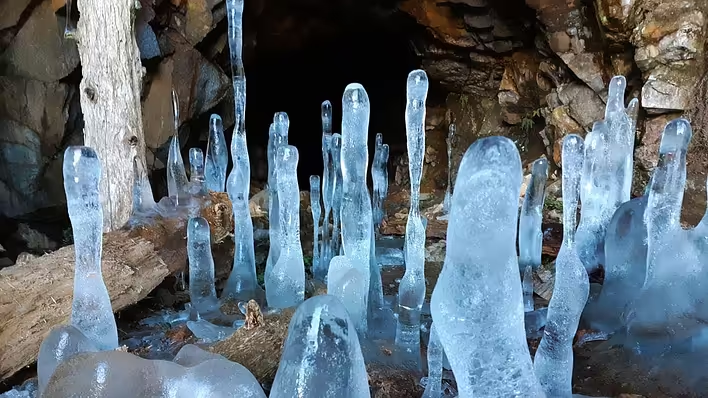
Ice stalagmites are natural formations that grow from the bottom up, formed from freezing water droplets. They resemble stone stalagmites found in caves, but instead of minerals, ordinary water and cold are at work here. Despite their simple mechanism, these structures look impressive and are often perceived as something rare or even exotic.
How Ice Stalagmites Form
The basis of the process is a combination of two factors: a water source and consistently low temperatures.
When water starts to drip down — for example, from the ceiling of a cave or a rock outcrop — it gradually freezes upon contact with the cold surface. Each new droplet adds a thin layer of ice on top. Over time, these layers accumulate, and the formation begins to grow upwards, creating a characteristic vertical "column".
Unlike icicles, which hang downwards, ice stalagmites develop from the floor or another surface, gradually increasing in height.
Льодові сталагміти
Льодові сталагміти
Conditions Necessary for Formation
For ice stalagmites to form, quite specific conditions are required:
constant or frequently recurring water supply (dripping, meltwater, condensation)
temperature below zero, preferably stable
absence of strong winds or sharp temperature fluctuations
If the temperature fluctuates, the structure may deform or melt faster than it can grow.
Where to See Them
Ice stalagmites most often form in natural conditions where moisture and cold combine:
in caves with a winter microclimate
in ice grottos and tunnels
under rock overhangs
in places where water slowly drips in winter
Sometimes similar formations can be seen even in domestic conditions — for example, under places where water drips from roofs or pipes in freezing weather.
Крижані сталагміти
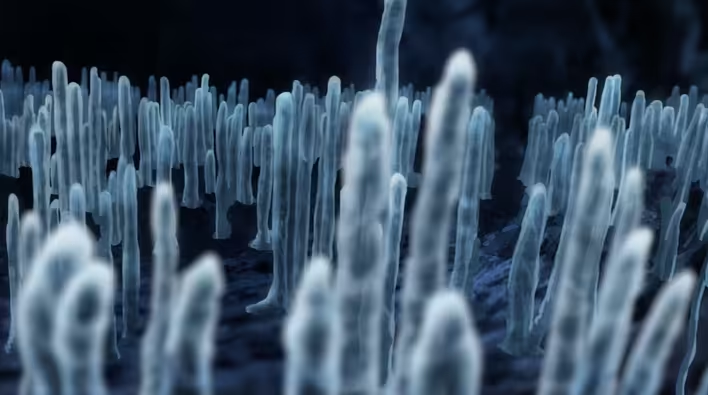
або "Крижаний бамбук"
Shape and Structure
The appearance of ice stalagmites can vary greatly depending on the conditions:
smooth or layered surfaces
conical or cylindrical shape
sometimes — irregularities or "segments", if droplets freeze unevenly
It is precisely because of these features that in some countries figurative names arise. For example, in Japan, comparisons to bamboo are sometimes used — due to the similarity to vertical stems. But this is merely a visual association, not a separate type of formation.
Льодові сталагміти
How They Differ from Other Ice Forms
Ice stalagmites are often confused with icicles or simply ice growths, but there is a fundamental difference between them.
Icicles grow from top to bottom
Ice stalagmites grow from bottom to top
Ice columns can form when a stalagmite and an icicle connect
Also, stalagmites are usually thicker and more massive, as their base is constantly nourished by new layers of ice.
Ice stalagmites are a good example of how simple physical processes create complex and aesthetic forms. There are no rare materials or complex reactions — just water, cold, and time.
That is why they can arise both in nature and near humans, if the conditions coincide.