Aymara is one of the indigenous peoples of South America, primarily residing in the Andes region, in the territories of modern Bolivia, Peru, and Chile. The largest part of this people lives around Lake Titicaca — one of the highest navigable lakes in the world.
Aymara is not only an ethnic group but also a living culture that has survived despite colonization, state changes, and globalization. Their language, traditions, and way of life still play an important role in the daily lives of millions of people.
History: Before and After the Empires
The history of the Aymara begins long before the emergence of the Inca Empire. They are believed to be connected to the ancient cultures of the Andes, particularly the Tiwanaku civilization, which existed approximately from the 1st millennium AD to the 13th century.
After the decline of Tiwanaku, Aymara state formations (the so-called "Aymara kingdoms") emerged in the region. In the 15th century, these territories were incorporated into the Inca Empire, but the local population retained many of their own traditions and language.
With the arrival of the Spaniards in the 16th century, Aymara life underwent significant changes: the colonial system, forced labor, and Christianization affected their way of life. At the same time, traditional beliefs and cultural practices did not disappear but partially merged with the new ones.
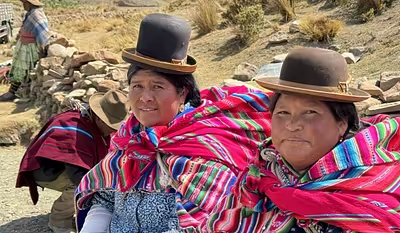
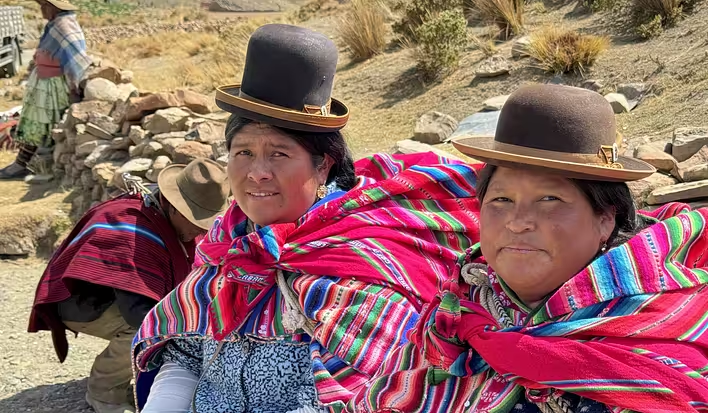
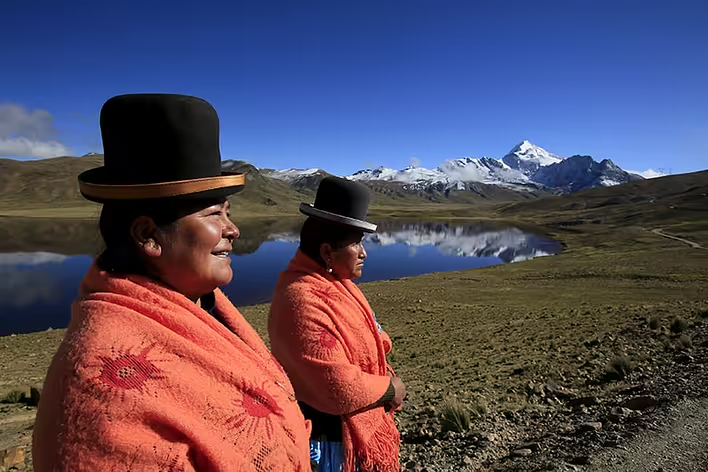
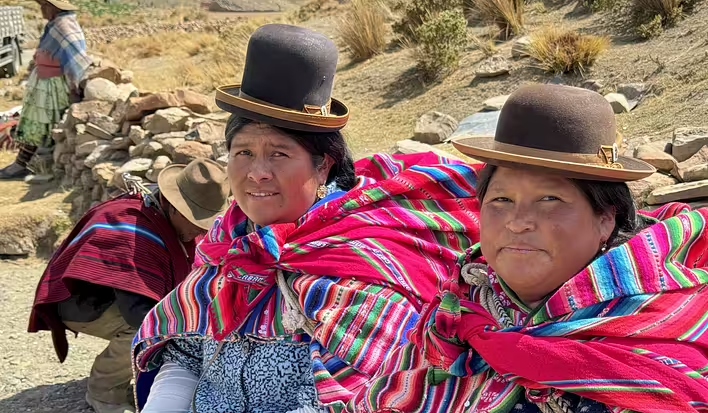
жінки Аймару
Life in the Highlands
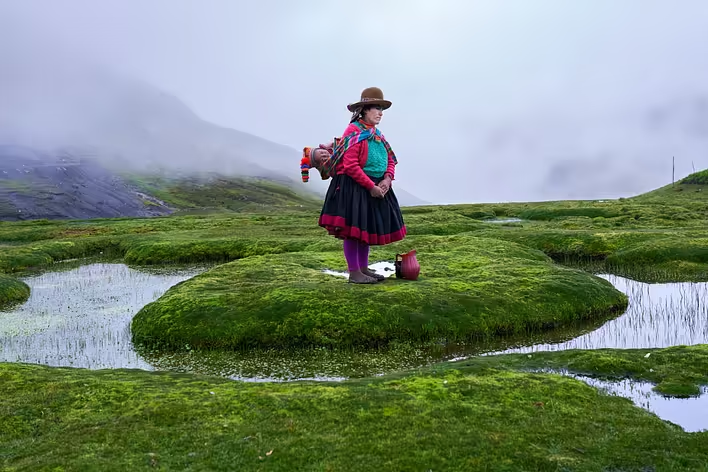
The life of the Aymara is inextricably linked to the nature of the highlands. At an altitude of over 3,500 meters above sea level, cold nights, and sharp temperature fluctuations have shaped a particular way of life, where everything is subordinated to survival and adaptation.
The basis of traditional agriculture is the cultivation of resilient crops — primarily potatoes, quinoa, and barley. At lower altitudes, corn is also grown. The breeding of llamas and alpacas plays a significant role: these animals provide wool, meat, and serve as transportation in mountainous conditions.
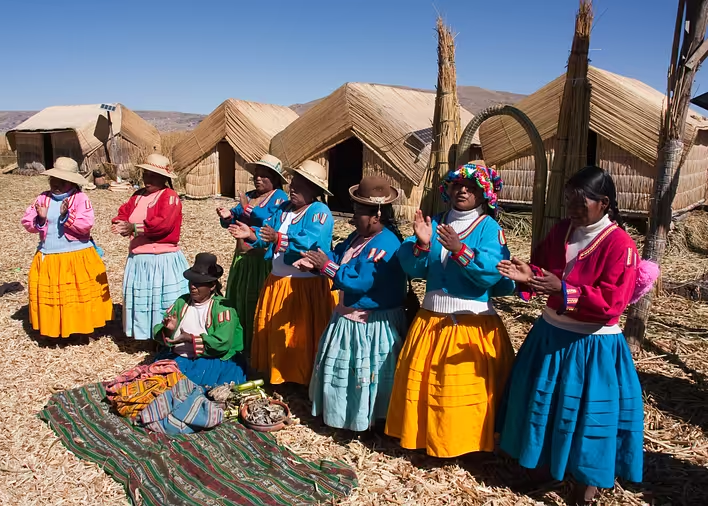
The housing of the Aymara is also adapted to the climate. Houses are most often built from clay (adobe) or stone — with thick walls that retain heat well. At the same time, a characteristic feature is the roofs covered with dry mountain grass, making the houses appear "straw-like" from a distance.
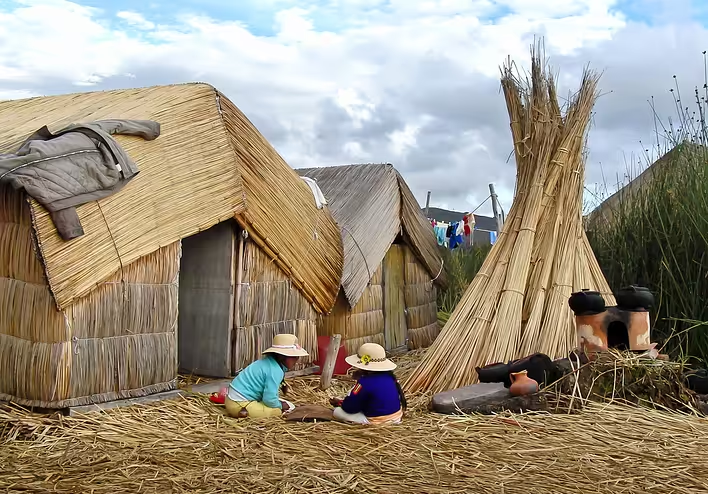
In the areas around Lake Titicaca, other types of housing made of reeds are also common. There, lightweight huts are built from the local totora plant, and sometimes even entire floating islands. Such dwellings look completely "woven" from plants and are another example of how the Aymara utilize the natural resources of their environment.
Clothing is also thoughtfully designed: it is made from alpaca or sheep wool, warm, layered, and brightly decorated. Women often wear wide skirts (polleras) and bowler hats — an element that appeared during the colonial period but has since become an integral part of the traditional image.
All of this together creates a sense of harmony with the environment: in Aymara life, there are almost no random decisions — every detail, from the material of the walls to the shape of the clothing, is dictated by the living conditions in the Andes.
Language and Worldview
The Aymara language belongs to a separate language family and today has official status in Bolivia and Peru. Millions of people speak it, making it one of the most widely spoken indigenous languages in South America.
Interestingly, there is a unique way of conceptualizing time. In Aymara culture, the past is often imagined as what is "in front of the eyes" (because it is known and visible), while the future is seen as what is "behind," as it is still unknown. This concept is supported by both the language and the gestures used by speakers.
Faith and Traditions
The Aymara worldview combines ancient Andean beliefs with elements of Christianity. A significant place is occupied by the veneration of Pachamama — the goddess of the earth and fertility.
Symbolic offerings are made to her: food, drinks, coca leaves. Such rituals are still conducted both in rural areas and in cities — for example, before the start of construction or important undertakings.
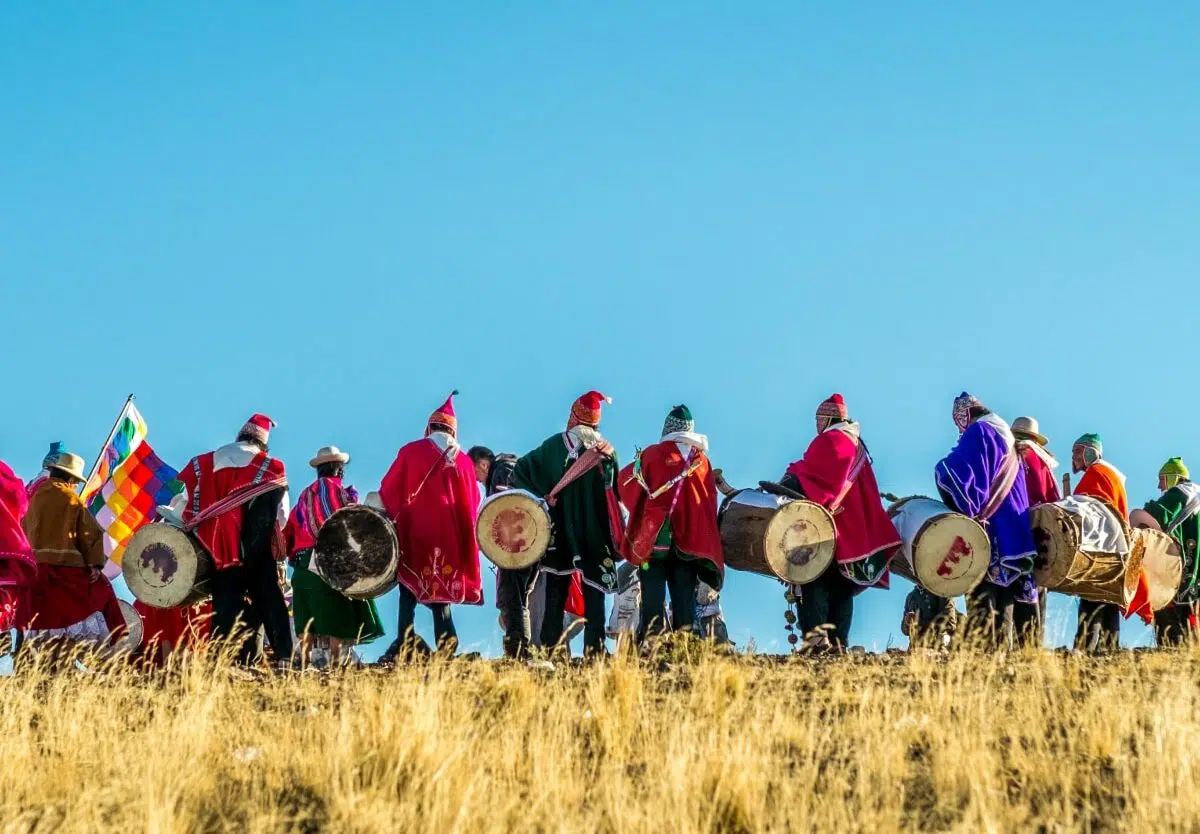
Aymara festivals are not just entertainment but a part of a deep connection with nature and the cosmos. One of the most important is the celebration of the New Year, which takes place on June 21, the day of the winter solstice in the Southern Hemisphere. This holiday is called Willkakuti ("return of the Sun") or Machak Mara ("new year").
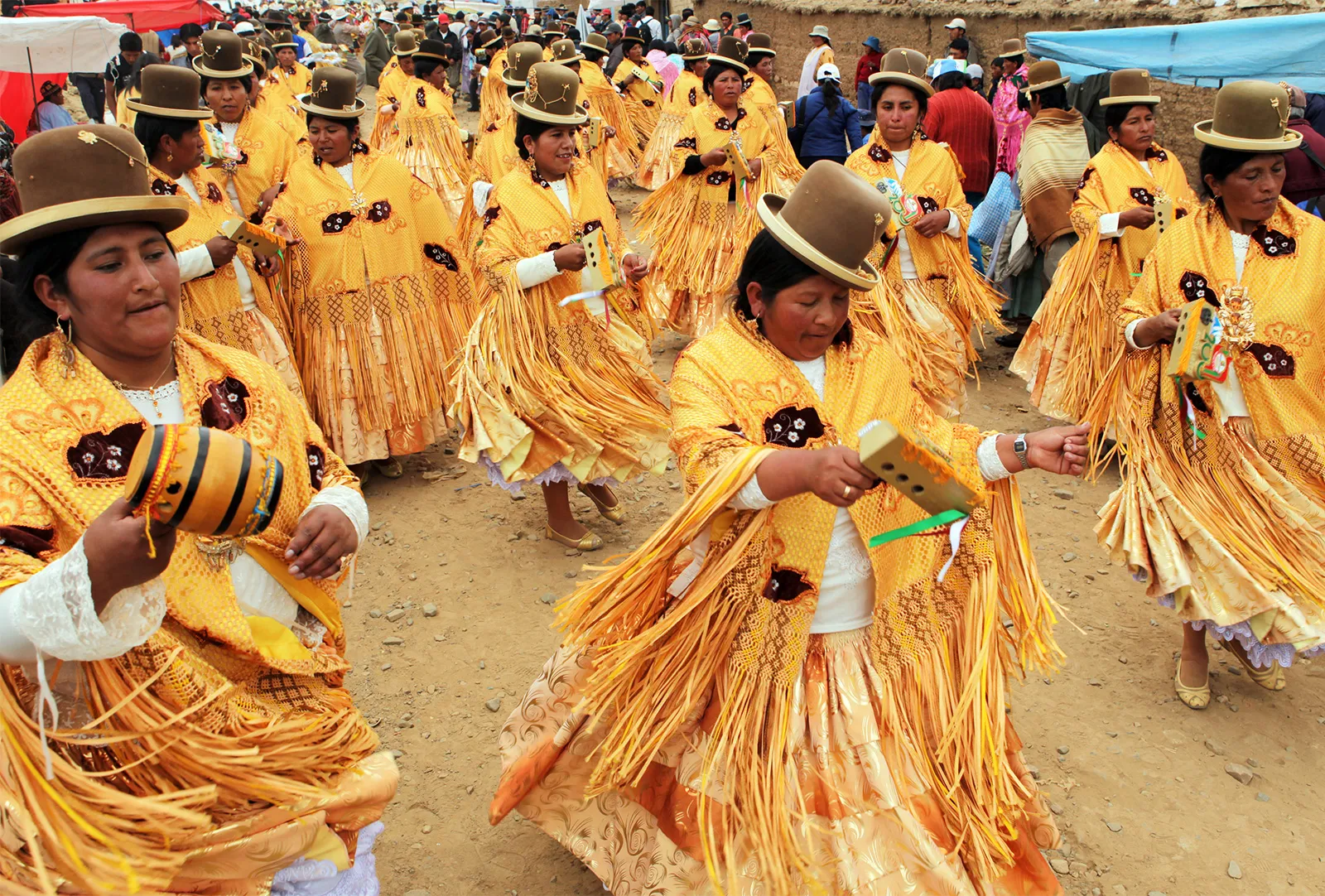
Жінки аймара танцюють під час фестивалю в Ла-Пасі, Болівія.
On this day, people gather before dawn, often in sacred places, to greet the first rays of the sun. It is believed that they bring energy and blessings for a new cycle of life. The holiday symbolizes renewal, the beginning of a new agricultural year, and the restoration of harmony with nature. Rituals include offerings to Pachamama, prayers, cleansing from all that is "old," as well as dances and communal celebrations.
Aymara Today
Today, the Aymara are not just residents of mountain villages. Many members of this people live in cities, engaging in trade, education, and politics.
The Aymara culture is particularly noticeable in the capital of Bolivia — La Paz, where traditions do not disappear but, on the contrary, become part of urban life. One of the most vivid examples is the grand celebration known as the carnival or the Gran Poder festival (Fiesta del Gran Poder).
This festival combines Catholic traditions with Andean beliefs and has deep roots in Aymara culture. During the celebration, the streets are filled with thousands of dancers in luxurious costumes, live music plays, and each dance has a symbolic meaning — often related to history, faith, or social status.For many Aymara, participating in this festival is not just a performance but a form of gratitude, promise, or spiritual obligation. The festival also reflects the modern identity of the people: a combination of traditions, faith, and urban life.