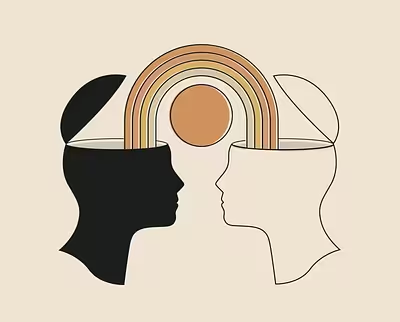
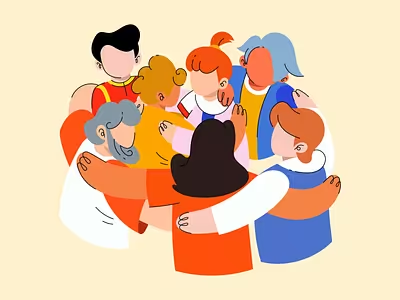
Thus, culture is everything that is created by humans in the process of historical development. It encompasses our knowledge, beliefs, art, moral norms, laws, and customs. Culture is what makes us unique as humanity. It distinguishes one community from another and shapes our identity.
Culture in Your Own Words
To explain in simple terms, culture is the way of life of people. It is how we celebrate holidays, what songs we sing, how we raise our children. Culture is even how we greet our neighbors or what dishes we choose for dinner.
Types of Culture
Culture can be divided into several types. Let's consider the main ones:
-
Material Culture: This is everything that has a physical form – buildings, clothing, tools. It is what can be seen and touched.
-
Spiritual Culture: This includes our values, beliefs, and ideas. It is the invisible aspect that shapes our consciousness.
-
Social Culture: Includes behavioral norms and social institutions. These are the rules of the game in society.
-
Artistic Culture: Art in all its forms – from painting to theater.
Types of Culture
Culture can also vary by its type:
-
Elite Culture: Designed for a narrow circle of people with a high level of education and aesthetic demands.
-
Mass Culture: Oriented towards a wide audience. This includes popular music, cinema, and television.
-
Folk Culture: Traditions and customs of a particular people or ethnic group.
What Subtypes Does Culture Divide Into?
In addition to the main types and kinds of culture, there are also subtypes:
-
National Culture: Reflects the characteristics of a specific nation.
-
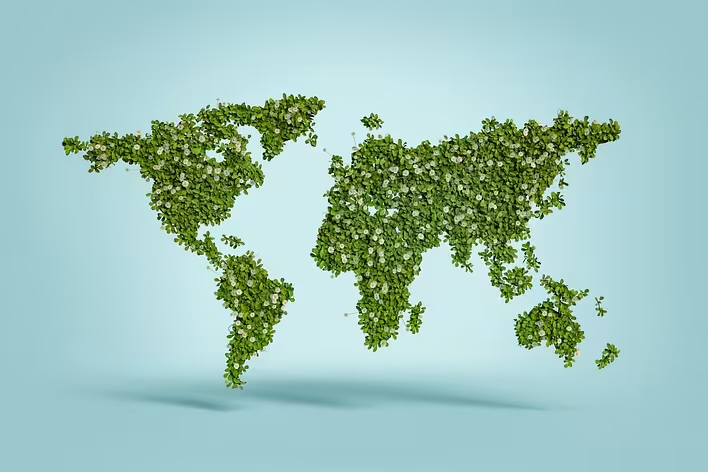
World Culture: Encompasses the cultural achievements of all humanity.
-
Regional Culture: Characteristic of a specific geographical region.
The Concept of "Culture" in the Modern World
In the modern world, the concept of "culture" is constantly changing. The internet and globalization blur the boundaries between national cultures. We have access to music from all corners of the world, can watch films in various languages, and read books by authors from different continents.
Thus, culture is not just a set of traditions or customs. It is a living matter that constantly changes and develops along with us. It makes our lives richer and more interesting. So do not miss the opportunity to discover new things and share your experiences with others!