

Let's start with the fact that "tian" is not just a word, but a whole cultural concept. In the Japanese language, “chan” (ちゃん) is a suffix added to a name to express affection or closeness. For example, if your name is Olya, in Japanese style, you might be called Olya-chan. However, in anime and manga, “tian” has come to mean a girl or a female character.
Who is a tian?
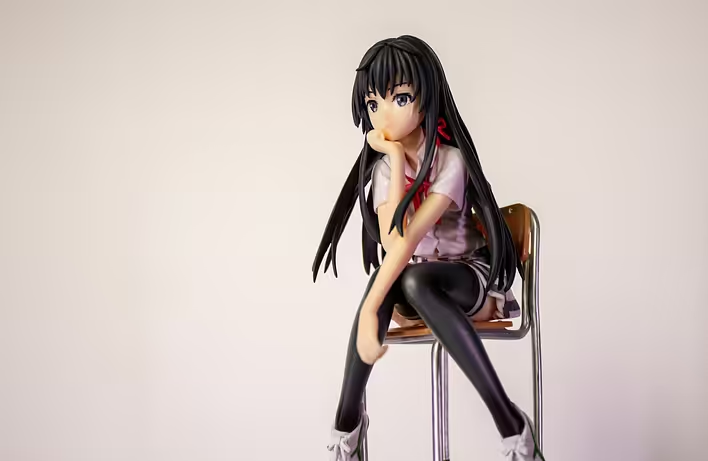
Now that we know what a tian is, we can say that a tian is a girl from anime or manga. She can be the main character or just a secondary character, but she always has her own features and charm. Tians often become objects of admiration for fans due to their unique style and behavior.
Who are tians: diversity of characters
Tians come in different varieties: from bold warriors to gentle and shy girls. Here are a few typical archetypes:
- Tsundere — a girl who at first seems cold and indifferent but eventually opens up.
- Yandere — on the contrary, at first appears gentle and kind, but can become dangerous.
- Dandere — a quiet person who speaks little but has a deep inner world.
Tian in English
Interestingly, the term “tian” is also used quite often in English-speaking environments. It is written as “tian” or “chan,” depending on the context. This indicates how deeply this phenomenon has penetrated global culture.
Why are tians so popular?
- Emotional attachment: Tians often have a charismatic personality and an interesting story that evokes emotional attachment.
- Visual appeal: The anime drawing style makes them aesthetically appealing.
- Diversity of roles: They can be anyone — from school friends to superheroes.
In conclusion, we can say that tians are not just characters from anime or manga. They are part of a culture that unites people around the world. They help us better understand ourselves and the world around us through the lens of fantasy and art. So if you are not yet familiar with this phenomenon — now is the time to dive into the fascinating world of tians!