


In a world where the rhythm of life is ever faster and the flow of information is relentless, more and more people are seeking ways to restore their inner balance and find peace. One such way is retreat — a word that has gained popularity recently but often remains misunderstood. Let's explore what a retreat is, why it is important, and how to practice it.
What is a retreat?
The word retreat comes from the English retreat, which means "to withdraw," "to step back." A retreat is a specially organized period of separation from the usual way of life for inner work, rest, and self-discovery.
This can be several days or weeks spent in silence, in nature, or in special centers where people give up their daily tasks, digital devices, and external distractions. The goal of a retreat is to focus on oneself, one's thoughts, emotions, physical and spiritual state.
Why is a retreat necessary?
-
Restoration of inner harmony. In the modern world, we often experience stress, fatigue, and irritation. A retreat helps restore the balance between mind and body, calming the nervous system.
-
Deep self-discovery. In silence and solitude, we can better hear ourselves, understand our true desires, and realize what is truly important to us.
-
Improvement of health. During a retreat, meditation, yoga, and breathing techniques are often practiced — this positively impacts physical well-being and reduces anxiety levels.
-
Break from the digital world. Giving up smartphones, social media, and constant notifications allows one to be present here and now.
What types of retreats are there?
- Meditative retreats: focused on mindfulness practices, meditation, and breathing exercises.
- Yoga retreats: include yoga classes, proper nutrition, and spiritual practices.
- Creative retreats: time for inspiration, painting, writing, and music without external distractions.
- Detox retreats: emphasizing body cleansing through diet and a healthy lifestyle.
- Silent retreats: where there are minimal words and maximum silence, allowing for a deeper immersion into one's inner world.
How to prepare for a retreat?
- Define your goal. What do you want to achieve? To rest, sort out your thoughts, change habits?
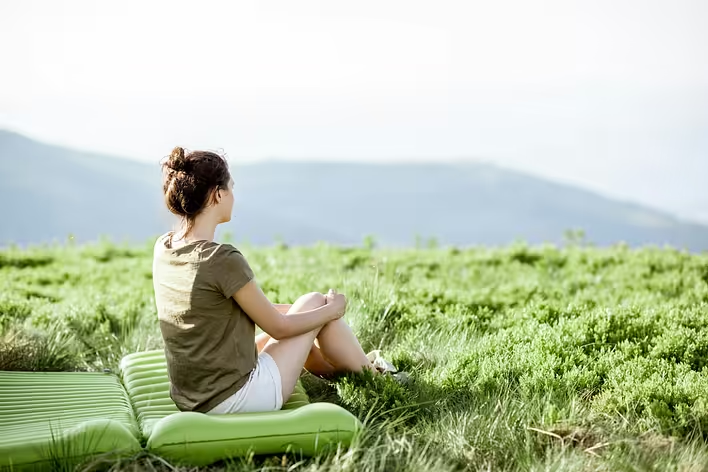
- Choose a comfortable place. This can be a special center or even a remote corner of nature.
- Give up gadgets. Try to minimize the use of smartphones and computers.
- Be open. During the retreat, many new ideas and feelings may arise — embrace them without judgment.
- Give yourself time. The best results come not from one day, but from systematic practice or at least a few days of separation.
You don’t necessarily have to go to the mountains or a special center for several days. A retreat can also be organized at home: turn off all gadgets, dedicate time to meditation, take a walk in nature, or read in silence.
A retreat is an opportunity to take a pause to hear yourself, restore your energy, and find a new perspective on life. In a world where each day dictates speed and pace, a retreat offers a chance to consciously step back, so that later you can move forward with new energy.