





This content has been automatically translated from Ukrainian.
I was searching for images on Pinterest with examples of foundation underpinning and basement excavation. It's hard to do when you don't know the terminology in English. So in this post, there will be terms in English that make it easier to search for content online.
When a house develops cracks and excavation work is being carried out near existing structures, builders face two technologies that are often confused with each other - underpinning and benching. Let's clarify what each method is, when it is applied, and how they fundamentally differ.
What is underpinning
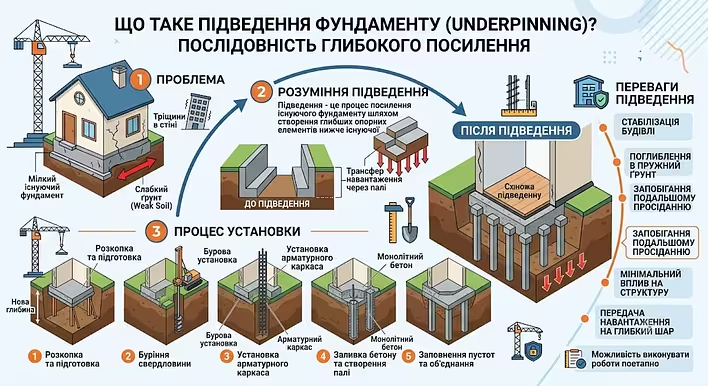
Underpinning is a set of construction works aimed at strengthening or deepening the existing foundation of a building. The goal is to increase the load-bearing capacity of the foundation or transfer the load to a more stable soil layer located deeper.
When is foundation underpinning needed
- Cracks in walls - diagonal cracks above windows and doors often indicate uneven settlement
- Change in soil conditions - water leaks, dehydration of clay soils, activity of nearby trees
- Adding floors - when the existing foundation is not designed for additional load
- Excavation work nearby - construction of a basement or pit next to your building
- Historical buildings - old foundations on shallow supports that do not meet modern standards
Main methods of foundation underpinning
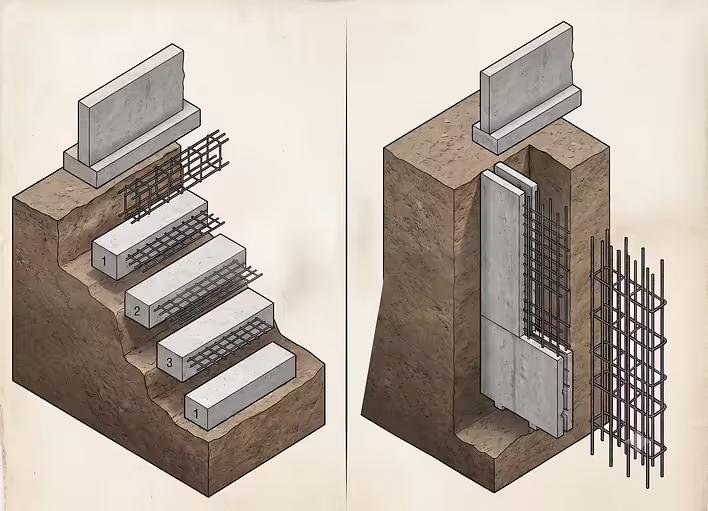
1. Mass concrete underpinning
The classic method: small sections (usually 1–1.5 m) are sequentially excavated under the foundation, poured with concrete layer by layer, allowed to gain strength, and then move on to the next section.
2. Beam and base method
A reinforced concrete beam is used to transfer the load to new supports (bases) located at the required depth. Effective when it is necessary to bypass utilities or other obstacles.
3. Mini-piled underpinning
An ideal option for limited access - for example, in basements or dense urban development. Small diameter piles are driven in using a compact drilling rig.
4. Screw piles
A quick and relatively inexpensive method that does not require the removal of large volumes of soil and minimizes vibration impact on neighboring structures.
What is benching in excavation work
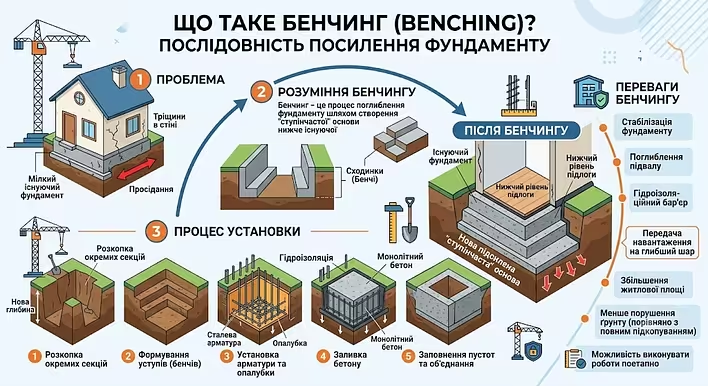
Benching is a method of safely excavating trenches and pits, where the walls of the excavation are formed into horizontal steps instead of a vertical wall. Each step reduces the angle of soil inclination, lowering the risk of collapse.
Why is benching needed
Trench collapses are one of the most dangerous causes of injury on construction sites. Benching allows:
- To distribute the soil load over several levels instead of one vertical plane
- To provide safe access for workers at different depths of the excavation
- To avoid costs for continuous shoring where the soil type allows
Types of benching
Let's compare:
Underpinning vs benching: what is the difference
Although both terms relate to excavation and foundation work, they address different tasks:
- Underpinning is about strengthening the structure of the building, working from the bottom up, under the existing foundation
- Benching is about safety in soil excavation, a temporary method of organizing the walls of a pit or trench during excavation work
These methods are often used together: during foundation underpinning, the excavation of soil near the building is organized according to the principle of benching to ensure worker safety and prevent soil collapse onto the existing foundation.
What to pay attention to before starting work
- Geotechnical survey - determine the type of soil, groundwater level, presence of underground utilities
- Structural survey - an engineer should assess the condition of the foundation and establish the cause of damage
- Permitting documentation - work near property boundaries or adjacent buildings may require agreement with neighbors
- Qualified contractor - foundation underpinning and excavation work are classified as high-risk activities and must be performed by licensed professionals
- Monitoring deformations - during work, it is advisable to install markers or sensors to monitor structural movements
Underpinning and benching are two important but different technologies in construction. Foundation underpinning saves the building from further destruction and allows for increased load on the foundation, while benching ensures safe excavation work, reducing the risk of trench and pit collapses. Understanding the difference between these methods will help property owners and developers properly plan their budget, choose a contractor, and avoid costly mistakes.
If you notice cracks in the walls of your house or plan excavation work near existing structures - consult a qualified geotechnical engineer for a professional assessment of the foundation's condition.