




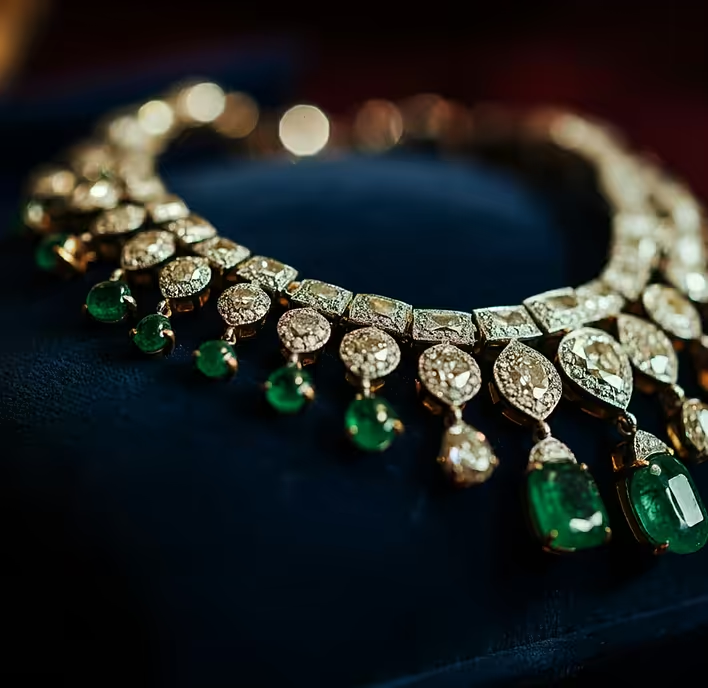
A necklace is a type of women's neck ornament that usually has an exquisite, ceremonial appearance and is often made from precious metals, stones, pearls, or glass. Unlike a regular necklace, a necklace typically fits snugly around the base of the neck or is positioned above the collarbone, and its composition is complex and decorative.
Etymology
The word necklace comes from the French language — collier, which translates to "necklace" or "collar." It was in France during the 18th–19th centuries that this ornament gained particular popularity among the aristocracy, especially at royal courts.
Difference from Other Ornaments
Necklaces are often confused with beads or chokers. However, there are differences between them:
-
Beads — a more general term for all neck ornaments made from strung elements (beads, stones, etc.).
-
Choker — a short necklace that fits snugly around the neck. It can be either simple or decorative.
-
Necklace — always decorative, often asymmetrical or featuring a large central element. It is an ornament created for effect, festivity, and highlighting status.
Types of Necklaces
Necklaces come in various forms:
-
Classic — made of pearls or precious stones;
-
Evening — multi-layered, with a large pendant;
-
Bridal — elegant, in white or pastel colors;
-
Modern — made from unusual materials (leather, textile, wood, glass).
Symbolism
At different times, necklaces symbolized status, luxury, elegance, or even subordination (as in the case of the choker-collar in Gothic fashion). Today, a necklace is a means of self-expression, a style element, and an accent in evening or business attire.
A necklace is more than just an ornament. It is art, history, and mood, frozen in a form that lies on the neck. One necklace can completely change a person's appearance: adding confidence, mystery, or elegance.