
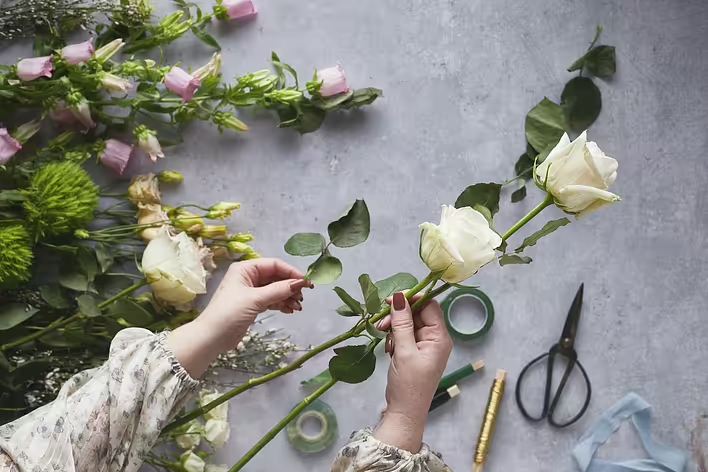
Floristry is the art of creating floral arrangements. On the surface, it seems simple: cut some flowers, put them in a vase — and it's done. But in reality, floristry is deeper and more interesting than it appears. It is a combination of aesthetics, knowledge of nature, a sense of color and mood. It is a way to convey emotions through the language of plants.
A person with a bouquet often carries something more than just flowers. It can be an apology, gratitude, recognition, support, or love. And it is the florist who helps to "say" this by choosing the right shape, color, texture, and even scent.
Where did floristry come from?
Floristry has a long history. In Ancient Egypt, rooms were decorated with lotuses, and in ancient Greece, wreaths were a symbol of honor. In the Middle Ages, flowers had a sacred meaning and were often used in religious ceremonies. Over time, during the Baroque and Renaissance periods, floristry transformed into an exquisite decorative art. Today, it has not lost its power — on the contrary, it has taken on new forms: from wedding decor to creative florariums.
Types of floristry
-
Wedding floristry — decorating weddings: bridal bouquets, boutonnieres, arches, tables, etc.
-
Interior floristry — creating arrangements for homes, offices, restaurants.
-
Event floristry — decorating events: presentations, birthdays, corporate parties.
-
Ritual floristry — bouquets and wreaths for memorial purposes.
-
Artistic (creative) floristry — experimental projects, floral art.
Basics of composition in floristry
For a floral arrangement to look harmonious, the florist considers:
-
Color palette (warm, cool, contrasting tones)
-
Proportions (balance between large and small elements)
-
Textures (combination of smooth, fluffy, spiky, etc.)
-
Shape (round, vertical, asymmetrical composition)
-
Seasonality (using flowers that are in season)
Modern floristry is more than bouquets
Floristry today is not just about holidays. It is about space and mood, about interior and atmosphere. Flowers are used to decorate events, photo zones, restaurants, and offices. Many even create personal floral arrangements for their homes to make the everyday beautiful.
A florist must have a sense of style, be aware of seasonal flowers, and know how plants behave in different conditions. It is also important to understand the psychology of color: for example, white flowers are often associated with calmness, while red ones are associated with passion.
In the modern world, there is a growing interest in ecological floristry. People choose arrangements without plastic, made from local plants, often using dried flowers. This approach emphasizes natural beauty without harming the environment.
Who is a florist?
A florist is a specialist who works with flowers and plants, creating aesthetic compositions: bouquets, wreaths, florariums, decor for interiors or events. But a florist is not just "someone who can arrange flowers nicely." They are an artist, decorator, psychologist, and a bit of a botanist all in one.
What does a florist do?
-
knows which flowers complement each other in color, shape, and symbolism;
-
creates arrangements on order or for sale;
-
takes into account the client's wishes and the event (wedding, anniversary, farewell, birthday, etc.);
-
knows how to care for flowers to keep them fresh longer;
-
works with seasonal, exotic, or even artificial plants;
-
sometimes grows flowers themselves or gathers them from local farms.
Floristry is not just about arranging beautiful bouquets; it is the art of working with nature, conveying mood, and creating harmony. A florist is simultaneously a designer, psychologist, and artist. And although flowers wilt over time, the emotions they evoke remain for a long time.