

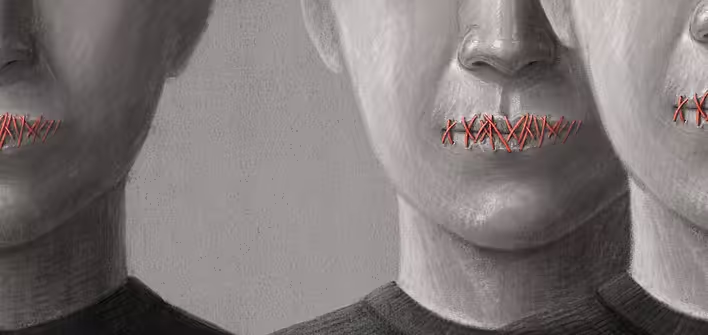
Censorship is a word that evokes a multitude of emotions and questions. It can be both invisible and obvious, both useful and dangerous. But what does this concept really mean? Censorship, in simple terms, is the control over the information we receive. How does it work and why is it important? Let's figure it out together.
What is censorship?
Censorship is the process of controlling or restricting access to information. It can be carried out by governments, corporations, or other organizations. This control can be applied to everything from books and movies to news and social media. The main goal of censorship is to protect society from harmful content or to prevent the spread of undesirable ideas.
Examples of censorship
- State censorship: In some countries, governments control the media to avoid criticism or maintain political stability.
- Self-censorship: Journalists or authors may limit themselves in their expressions to avoid conflicts or repression.
- Corporate censorship: Social networks may remove content that violates their rules.
Why does censorship exist?
Censorship can have both positive and negative consequences. Let's look at the main reasons for its existence:
- Protection of society: Censorship can prevent the spread of violent or hateful content.
- Political control: It helps governments control the information space and avoid political crises.
- Economic interests: Corporations may use censorship to protect their brands or products.
How to recognize censorship?
Sometimes censorship is so subtle that it is hard to notice. Here are a few tips on how you can detect it:
- Check information sources: If a news story seems suspicious, try to find alternative sources.
- Pay attention to the absence of information: If a certain topic is not covered in the media, it may be a result of censorship.
- Be critical: Don't take everything at face value. Analyze and ask questions.
Censorship in the digital age
Today, censorship is particularly relevant in the online space. Social networks and online platforms have a huge influence on what we see and read. Algorithms may hide certain content or favor others. This is also a form of censorship.
How to protect yourself from digital censorship?
- Use a VPN: This will help bypass regional blocks and access blocked content.
- Maintain privacy: Use encryption and protect your personal data.
- Support freedom of speech: Sign petitions and support initiatives against excessive censorship.
Conclusion
Censorship is a complex phenomenon with many faces. It can be useful for protecting society or dangerous for freedom of speech. It is important to understand that censorship is not always obvious and can take hidden forms. Your task is to be attentive and critical of the information you consume. Only then can you protect yourself from manipulation and preserve your right to your own opinion.