


Dystopia is a literary genre that describes a society where everything goes wrong, contrary to our wishes. It is a world dominated by totalitarian regimes, technologies spiraling out of control, or human values declining. Dystopia is another word often used to describe such plots. Both terms denote a negative development of society.
Signs of Dystopia
Dystopian works have several characteristic features:
-
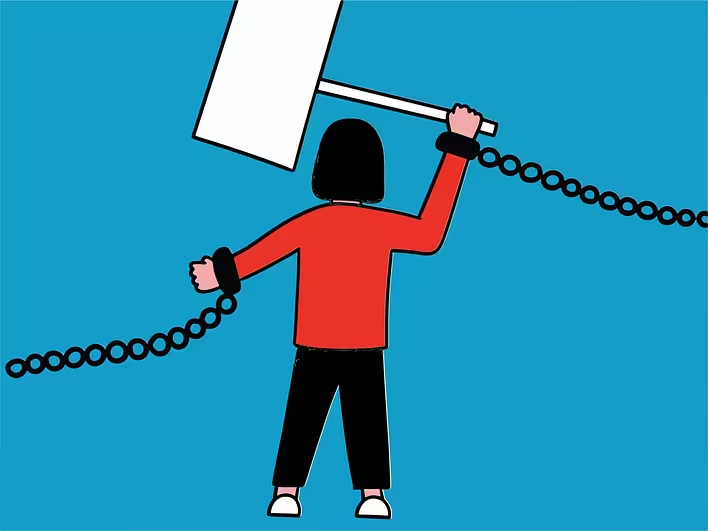
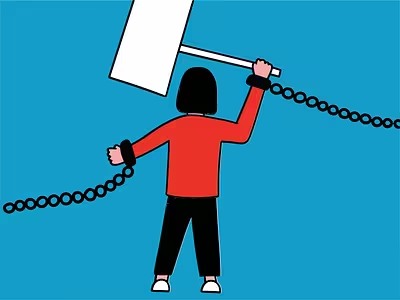
Totalitarian regime: In such worlds, power is concentrated in the hands of one person or group. Control over society is exercised through fear and repression.
-
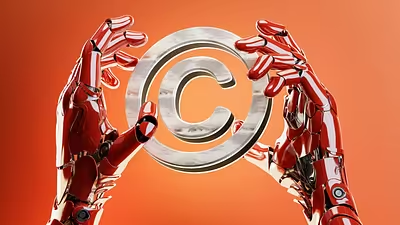
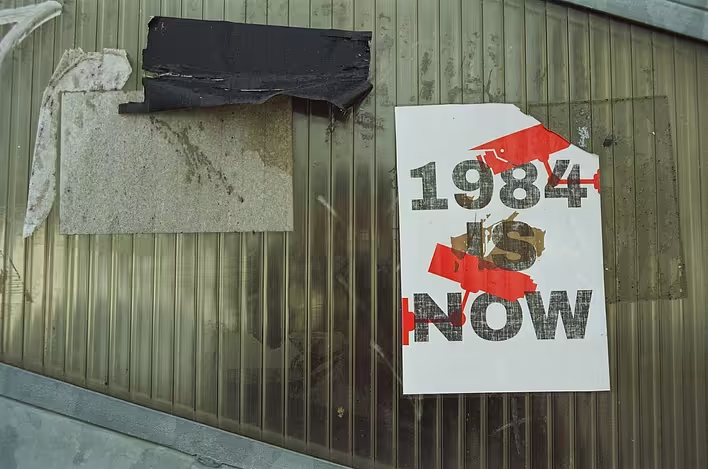
Technological control: Technologies are used for manipulation and control over people. For example, in George Orwell's novel "1984," Big Brother constantly watches over citizens.
-
Loss of individuality: People lose their uniqueness and freedom of choice. In a dystopian world, everyone must be the same and submit to the system.
-
Environmental disasters: Dystopias often depict a world after an ecological disaster. This can result from war, pollution, or depletion of natural resources.
-
Social inequality: In such societies, class divisions reach extreme limits. Wealth and power are concentrated in the hands of the chosen few.
Representatives of Dystopia
Dystopia has many vivid representatives in literature:
-
George Orwell "1984": A classic of the genre that describes a totalitarian society under the constant surveillance of Big Brother.
-
Aldous Huxley "Brave New World": Here we see a world where people are controlled through genes and drugs.
-
Ray Bradbury "Fahrenheit 451": A story about a society where books are burned to avoid "dangerous" ideas.
-
Margaret Atwood "The Handmaid's Tale": A novel about a world where women have lost their rights and become the property of the state.
Why is Dystopia Important?
Dystopia is not just scary stories for the night. It plays an important role in our society:
-
Warning about dangers: Dystopian works warn us about potential threats — from technologies to political regimes.
-
Critique of modernity: Through fictional worlds, authors critique real problems of our time.
-
Search for solutions: Dystopias force us to think about how to avoid such scenarios in real life.
Thus, dystopia is not just fiction or fantasy. It is a powerful tool for analyzing and critiquing our society. It helps us recognize potential dangers and seek solutions to avoid them. So the next time you read or watch something new — think: could it be dystopia?