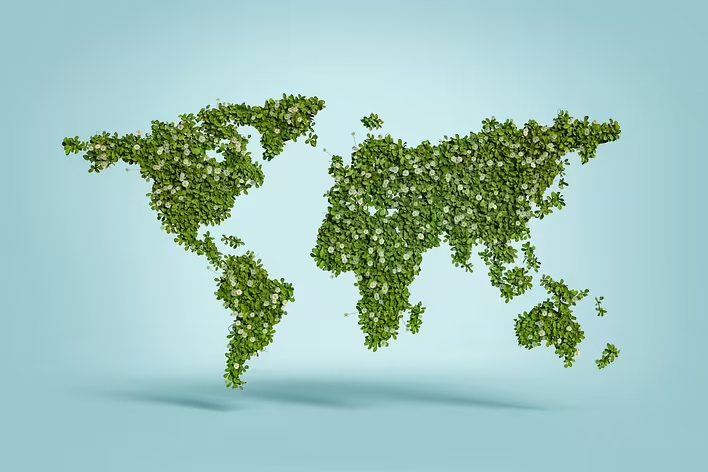




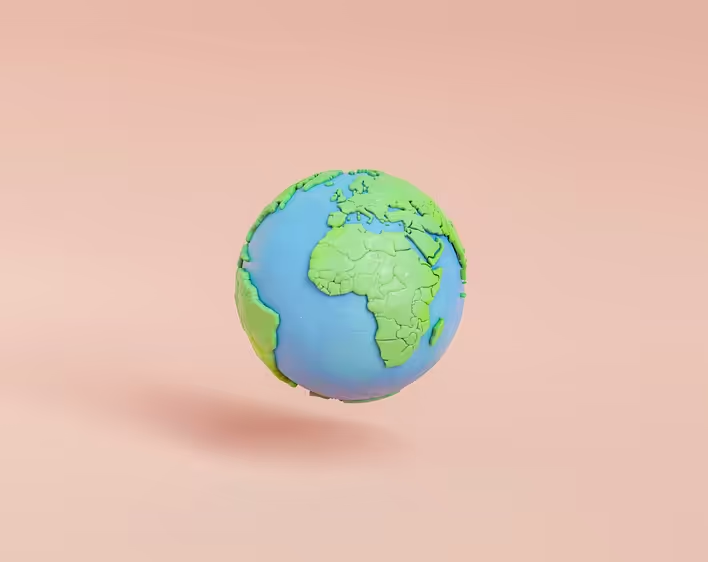
Globalization is the process by which the world becomes increasingly interconnected and interdependent. Imagine a vast web that encompasses countries, cultures, economies, and technologies. Globalization allows people to exchange ideas, goods, services, and knowledge without rigid borders. It's like a shared platform where everyone can contribute something of their own and gain something new.
How does globalization work?
The processes of globalization encompass several key areas:
-
Economic integration Countries open their markets to international trade. For example, Ukraine exports grain to Europe and imports electronics from Asia.
-
Cultural exchange We have the opportunity to explore art, music, films, and traditions from around the world. What was once exotic is now easily accessible — for example, the popularity of Japanese anime among Ukrainian teenagers.
-
Technological progress The Internet and digital technologies are the main drivers of globalization. They allow communication, learning, and working with people from any corner of the world in real time.
How does globalization manifest in everyday life?
-
International brands Companies like McDonald’s or Coca-Cola are present in dozens of countries and offer standardized products.
-
Digital platforms Social networks like Instagram or TikTok connect millions of people around the world.
-
Educational initiatives Many universities and online platforms provide access to education regardless of the country of residence.
Advantages and challenges of globalization
Like any large-scale phenomenon, globalization has both positive aspects and potential risks.
Advantages:
-
Stimulating economic development Countries can specialize in areas where they have an advantage, contributing to increased efficiency and production.
-
Cultural diversity Openness to other cultures enriches our lives and broadens our worldview.
-
Accelerating innovation Ideas, experiences, and technologies spread faster due to international cooperation.
Challenges:
-
Environmental burden Increased industrial production and the transportation of goods over long distances lead to environmental pollution.
-
Economic inequality Globalization is not equally beneficial for everyone: some countries or social groups remain on the sidelines of global development.
-
Risk of cultural homogenization Popular mass culture can overshadow local traditions, languages, and identities.
How can we leverage the opportunities of globalization?
Globalization provides tools that anyone can use for personal development and professional growth:
-
Education Online courses on Coursera, edX, Prometheus, or Udemy open access to quality knowledge from around the world.
-
Travel and intercultural exchange Visiting other countries helps to better understand the diversity of the world and broaden one's perspective.
-
Entrepreneurship You can create a business that works with clients or partners from different countries — through the internet, marketplaces, or freelance platforms.
Globalization is a multifaceted and constantly changing process that shapes the modern world. It creates new opportunities but also presents humanity with significant challenges. It all depends on how we use its tools: responsibly, consciously, and with consideration for the interests of both the global community and local cultures.
A globalized world is not just about large corporations and international agreements, but also about each individual's opportunity to be part of a global exchange of knowledge, experience, and resources. The key is to use these opportunities for the benefit of oneself and society.