





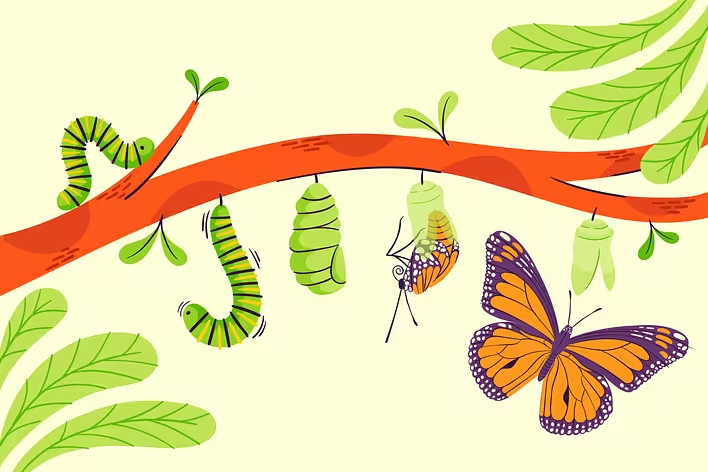
Imagine opening a book and entering a world where familiar things suddenly change their form and meaning. It could be a tree transforming into a person, or a person becoming a butterfly. Such wonderful transformations are called metamorphoses. But what is metamorphosis in literature? How does it work and why do we love these amazing changes so much?
What is metamorphosis in literature?
Metamorphosis is the process of changing form or state. In literature, metamorphoses are not just changes in the appearance of a character or object, but a deep symbolic process. They can reveal the inner world of characters, reflect their emotional experiences, or highlight certain themes of the work.
Classical examples of metamorphoses
One of the most famous examples is Ovid's "Metamorphoses." This ancient poem tells about numerous transformations of gods and humans. For instance, Narcissus, enchanted by his own reflection in the water, transforms into a flower. This myth emphasizes the theme of narcissism and its consequences.
Another classical example is Franz Kafka's "The Metamorphosis." The main character wakes up one morning in the body of a gigantic insect. This metamorphosis symbolizes the alienation and isolation that a person feels in the modern world.
Metamorphosis as a symbol
Metamorphosis in literature often serves as a symbol of transformation and development. It can reflect changes in a character's personality or worldview. For example, in the novels of Charles Dickens, there are often characters who undergo moral purification and change for the better.
Metamorphoses can also highlight social or political changes. In George Orwell's "1984," society undergoes a metamorphosis under the influence of a totalitarian regime, forcing people to rethink their values.
How to use metamorphoses in your own works?
If you are writing your own work and want to add an element of metamorphosis, here are a few tips:
-
Understand the symbolism: Make sure your metamorphosis has a deep meaning and corresponds to the theme of your work.
-
Use details: Describe the transformation process in a way that the reader can "see" it. Details create atmosphere and make the transformation more real.
-
Leave room for interpretations: Give the reader the opportunity to decipher the symbolism of your metamorphosis themselves. This will make your work more interesting and multifaceted.
Why do we love metamorphoses?
Metamorphoses enchant us with their unpredictability and magic. They allow us to escape reality and see the world from a new perspective. They also remind us that change is an integral part of life, which can be both a challenge and an opportunity for growth.
Thus, metamorphosis is not just a literary device; it is a way to show the deep changes and transformations that happen to us every day. They help us understand ourselves and the world around us better and deeper. So the next time you open a book and come across a wonderful transformation, remember: behind it lies a whole universe of meanings and possibilities for reflection.
In conclusion, metamorphosis in literature is a powerful tool for authors and an exciting element for readers. It allows us to look beyond the ordinary and see a new dimension in everyday things. And who knows? Perhaps it is through these magical transformations that we are able to find answers to the most complex questions of life.